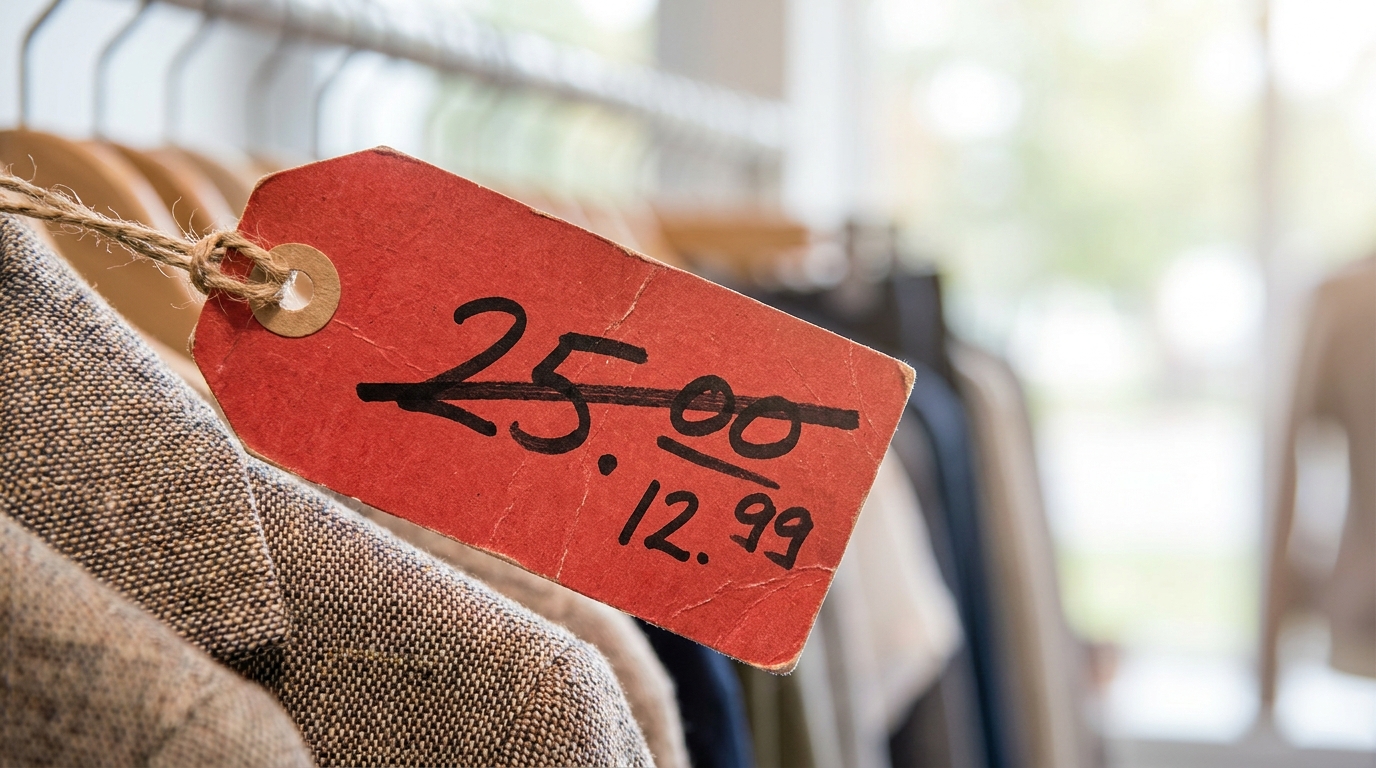
How to Spot a Fake “Was” Price
A discount is a comparison between two numbers, and only one of them is the price you pay. The other — the crossed-out "was" figure — is where most misleading promotions live. Several jurisdictions now regulate how that reference price may be calculated, but enforcement is uneven and the tactics persist, which leaves the practical defence with you.
The reference price is the thing to interrogate
The honest version of a "was" price is the amount the item genuinely sold for, at that retailer, recently, for a sustained period. The dishonest versions are variations on inflating it: a recommended retail price the item never actually sold at, a price that held for a single week specifically to establish a reference, or a figure copied from a different seller entirely.
A useful test is duration. If a product has been listed at its "discounted" price for most of the last few months, the discount is decorative. This is precisely what price-history tools make visible in seconds — a habit we walk through in detail in our guide to price tracking.
A worked example
A stand mixer is advertised at "€199, was €399 — save 50%". A price-history check shows it launched eighteen months ago at €329, sold at €229–€259 for most of the past year, and touched €199 twice before, during sales events. Three conclusions follow. First, the €399 reference is fiction — the item never sold at it. Second, the real discount against the typical price is about 15–20%, not 50%. Third, €199 genuinely is the item's floor, so if you want the mixer, the price is good — just not for the reason the badge claims. Notice that the verdict on the price can be positive even when the verdict on the marketing is damning; separating those two judgments is the whole skill.
Signals that a percentage is not real
A few patterns recur often enough to be worth memorising:
- Very large round percentages on unbranded goods, where the reference number is arbitrary because no market price exists.
- Countdown timers that reset when the page reloads or the timer expires.
- "Only 3 left" counters that never change across visits or devices.
- Identical "sale" prices at every retailer, which usually means the reference is a manufacturer's list price rather than anything anyone charged.
- A permanent-sale culture in the category — mattresses, furniture, rugs and jewellery are notorious for resting-state discounts of 50–70%, where the crossed-out number exists only to be crossed out.
- A price that rose in the weeks before the event — repositioning the reference so the promotional price lands near the normal one.
None of these individually proves anything. Several together generally mean the number is manufactured.
Check the price, not the badge
The reliable move is to ignore the promotional framing entirely and evaluate the final amount on its own terms. Two questions settle it: What does this item cost elsewhere right now? And what has it cost historically? A history chart answers both and is immune to how the page is dressed. If the current price is competitive against other sellers and near its own historical floor, it is a good price regardless of whether it wears a badge. If it is not, a large red percentage does not change that.
The discipline pairs naturally with knowing when categories genuinely discount — promotional calendars are predictable, and a claimed discount that arrives far off its category's cycle deserves extra scrutiny (see the seasonal buying calendar).
Where you have recourse
In many markets, advertising a saving against a price that was never genuinely charged is a consumer-protection matter rather than merely poor taste. EU rules, for instance, generally require that a "was" price reflect the lowest price applied in the preceding 30 days; several national regulators have fined major retailers over inflated references. If you believe a retailer has misrepresented a saving, the relevant national consumer authority is the place to raise it — and a screenshot of the listing with a visible date is what makes a complaint actionable rather than anecdotal.
For everyday purposes, though, the defence is simpler than the regulation: judge the number you would actually pay, and treat the number beside it as marketing until proven otherwise.
FAQ
Is an inflated "was" price illegal? Often, yes — most consumer-protection regimes prohibit misleading reference prices, and the EU's rules specifically anchor "was" prices to the prior 30-day low. Enforcement varies, which is why the practical protection remains your own comparison.
Do these tricks appear on big-name retailers too? Yes, particularly through third-party marketplace sellers whose reference prices platforms police loosely. The retailer's brand on the page is not a guarantee about the listing's arithmetic.
What's the fastest single check? Paste the product into a price tracker and glance at one year of history. Ten seconds, and it converts every claim on the page into a verifiable statement.

Priya spent years on the analytics side of a regional marketplace before writing about it. She explains the machinery behind the storefront — why a price moved, why an item is suddenly everywhere, what a platform's incentives actually are. She covers our e-commerce trends reporting.
More about our writers →More in Deals & Discounts

Outlet vs Clearance: Two Different Supply Chains
Clearance is real surplus with a real former price. Outlet stock is often manufactured for the outlet — and its discount compares against a hypothetical.

Which Loyalty Programmes Are Actually Worth It
Convert the points language into a percentage and most programmes stop looking generous. Member prices, not points, are where the real value sits.

Preparing for Black Friday Like You Mean It
The people who genuinely save in November decided what to buy in September. The list, the benchmarks and the rules all come before the noise.