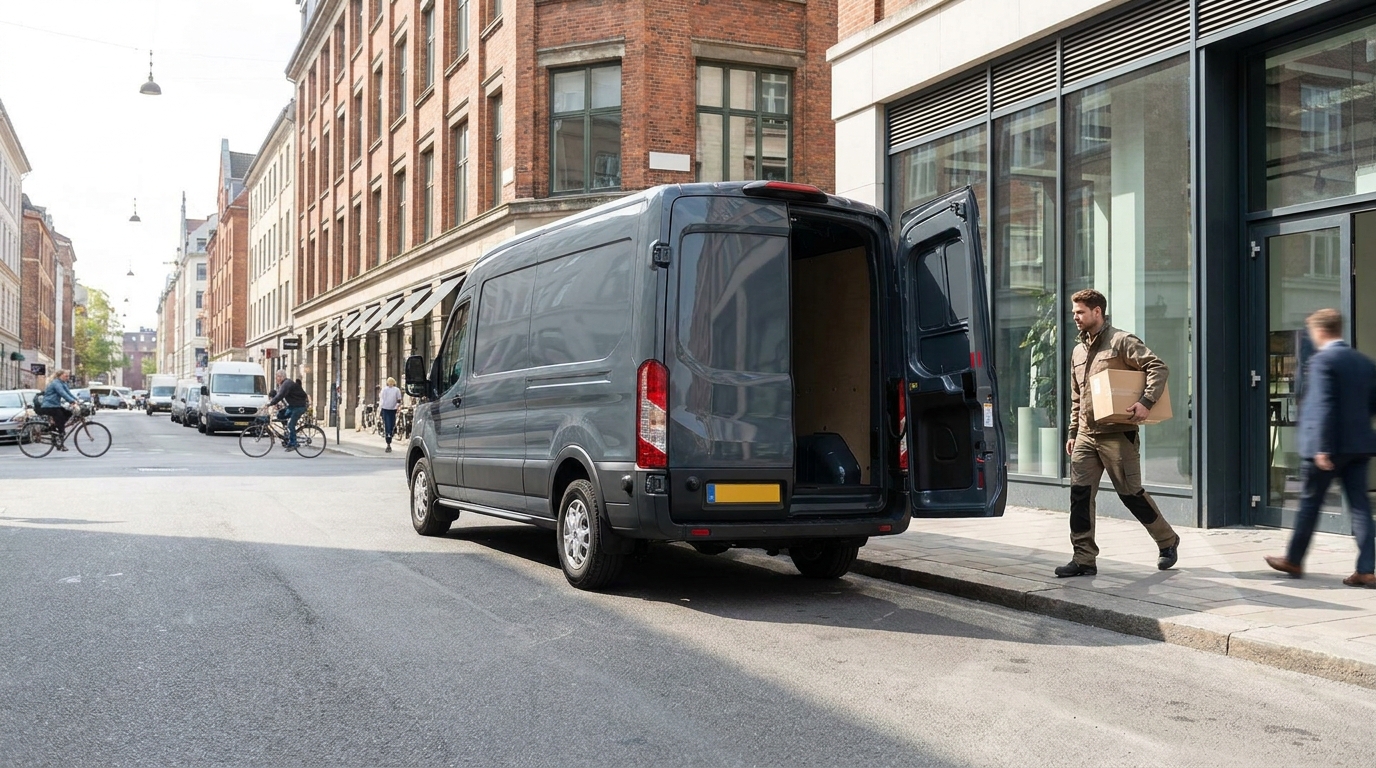
The Economics of Same-Day Delivery
Fast delivery is the most visible competitive feature in online retail and one of the least profitable. Understanding why explains a good deal about how it is priced, where it is available, and why it periodically retreats — and it makes the membership-or-not decision straightforward arithmetic.
The last mile dominates the cost
Moving goods in bulk between warehouses is efficient. Delivering a single parcel to one address is not: the final leg commonly accounts for around half of total delivery cost. Compressing it into hours makes it worse — routes cannot consolidate as effectively, vans run below capacity, and the network must be sized for peak demand rather than average.
Same-day fulfilment also requires inventory positioned close to customers, which means more, smaller facilities holding duplicate stock — substantial working capital spent before a single parcel moves. This is why same-day service maps so tightly to population density: the model works in city centres and fails in the countryside, and no amount of branding changes that geometry.
Why it is offered anyway
Speed drives conversion and retention, and it is frequently subsidised through membership programmes that bundle delivery into a recurring fee. That changes the economics: the retailer is not pricing each delivery but an annual relationship in which the member orders more often — the delivery pass is a loyalty machine wearing a logistics costume. The same evaluation logic applies to every paid loyalty tier: judge it as a rebate on behaviour you already have, never as a reason to change it.
It also ratchets expectations across the market, which is why availability expands in dense areas and stalls elsewhere, and why "free" fast delivery keeps migrating behind memberships and minimum-order thresholds.
A worked example: the membership break-even
A delivery pass costs €70 per year and replaces a €4.90 fee per order. The break-even is 15 orders a year — one every 3.5 weeks. A household that orders weekly (52 orders) saves roughly €185 net; one that orders monthly (12 orders) loses €11 and, more importantly, acquires a psychological push to order more to "get their money's worth" — which is the programme working as designed, on the retailer's side. The input that decides this is not intention but history: count last year's actual orders from your account page before renewing. The same audit-by-statement method applies to every recurring charge, as laid out in the annual subscription audit.
What it means for what you pay
Free rapid delivery is never free; it is bundled, recovered through product pricing, or subsidised to buy market share. Practical consequences:
- Compare totals, not stickers — a bundled-delivery retailer against one charging separately requires adding the membership fee amortised over your real order count.
- Slower options are increasingly rewarded — many retailers now offer a discount, loyalty credit, or simply exist as the "no-rush" button. Paying for speed you do not need is among the easiest costs to remove.
- Thresholds shape baskets — a €39 minimum for free delivery reliably inflates orders with filler items. Deciding the basket first and the delivery option second keeps the causality pointing the right way.
Where the trend is going
The pattern in most markets has been rapid expansion followed by consolidation: the fastest tiers survive in dense urban areas, while broad next-day service becomes the practical standard elsewhere. Cost pressure, driver availability, and growing scrutiny of the emissions and labour conditions attached to compressed delivery windows all push the same direction. For shoppers, the stable posture is simple — treat guaranteed speed as a priced feature to buy when needed, not a default to expect everywhere.
FAQ
Is same-day delivery bad value by definition? No — when you genuinely need the item today, it competes with a trip (fuel, parking, time), and often wins. The poor value is paying speed premiums, in money or membership, for orders where tomorrow or Thursday would have been identical.
Why is delivery free from some cheap retailers and paid at premium ones? Because "free" is a pricing decision, not a cost statement: it is either inside the product margin or subsidised for growth. Premium retailers with paid delivery are often simply pricing it honestly.
Do delivery memberships change how much people spend? Consistently, yes — members order more often and consolidate spending with that retailer. That is the fee's real purpose. Whether that is good or bad for you depends entirely on whether the extra orders replaced dearer alternatives or created new spending.

Lena planned warehouse and delivery operations before moving to writing, which is why she is sceptical of any promise involving the word 'instant'. She covers shipping, returns and the unglamorous logistics that decide whether an online order actually works out.
More about our writers →More in E-Commerce Trends
Rising Marketplace Fees — and Who Really Pays Them
Commissions, fulfilment and ad costs on the big platforms end up inside retail prices. The fee stack explains prices that otherwise make no sense.
The End of Free Returns
Across major retailers, returns are quietly becoming slower, costlier and more conditional. Here's why — and how to shop under the new rules.
Voice & Chat Shopping: When the Assistant Picks the Product
Buying through a speaker or an AI chat is moving from demo to habit — and it compresses everything about ranking and sponsorship into one confident answer.