Paying Safely Online: What Actually Matters
Most online payment fraud does not involve breaking encryption. It involves persuading someone to enter real details into the wrong place, or exploiting a payment method that offers no way back. Both failure modes are defended by habits, not by technology — and the habits take minutes to learn.
The padlock is necessary, not sufficient
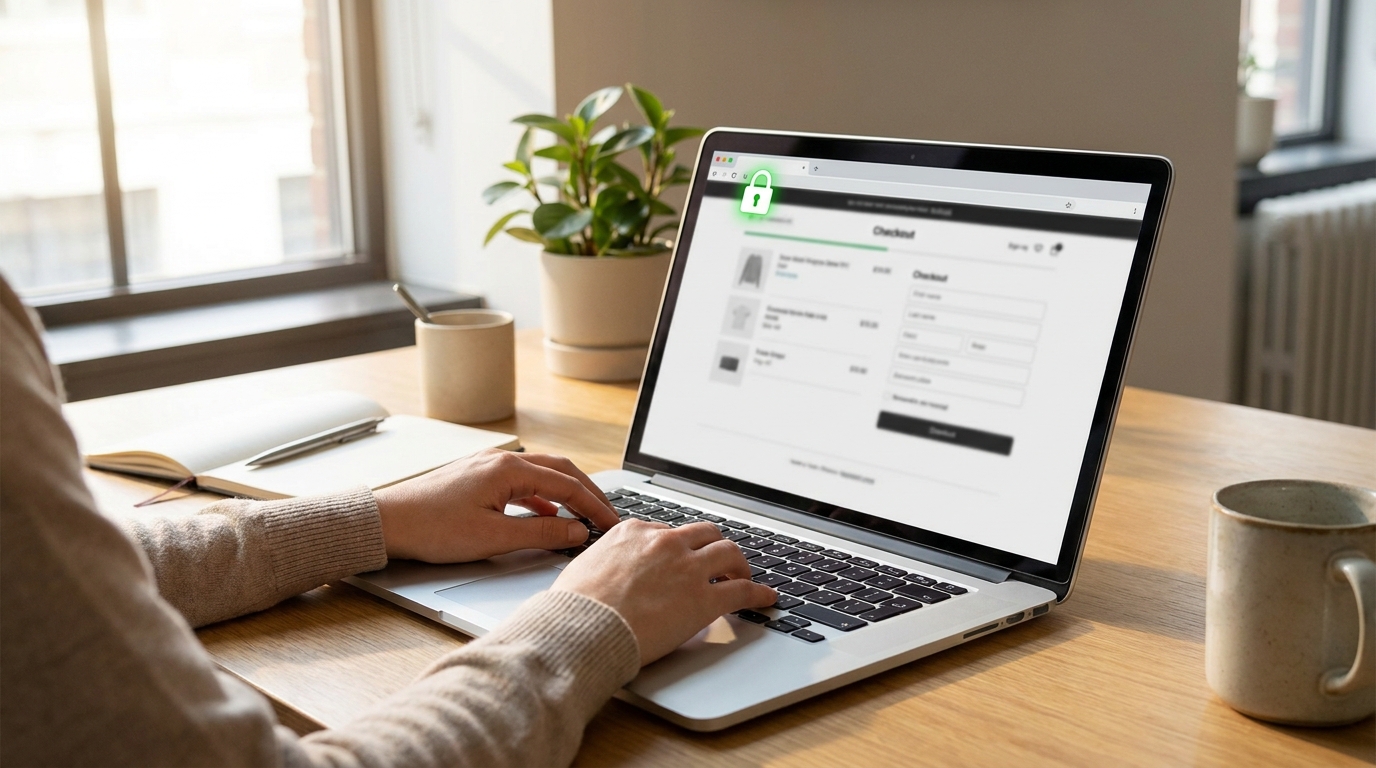
An encrypted connection means the data travelling between you and the site cannot easily be read in transit. It says nothing about who operates the site. Certificates are free and automatic, so fraudulent sites have them too — by most estimates, the overwhelming majority of phishing pages now load over perfectly valid HTTPS.
What matters more is the domain itself. Check it character by character on anything you reached from a link, an advertisement or a message: near-miss domains (a swapped letter, an extra word, an unfamiliar ending) are the standard technique. Typing a known address directly, or using a saved bookmark, eliminates most of this risk at zero cost.
Choose the payment method for its recourse
Payment methods differ enormously in what happens when a transaction goes wrong, and this difference matters more than any other single decision at checkout:
| Method | If goods never arrive / fraud | Practical notes |
|---|---|---|
| Credit card | Strong chargeback rights; issuer often liable with you | Best default for larger purchases |
| Payment intermediary (PayPal-style) | Own dispute process; card number hidden from merchant | Good for unfamiliar merchants |
| Debit card | Weaker; money has genuinely left your account | Fine for trusted, routine purchases |
| Bank transfer | Essentially none | Treat a shop demanding it as a warning |
| Gift-card codes / crypto requests | None, by design | This is how scammers ask to be paid |
A seller who accepts normal methods but pushes hard toward the irreversible ones is telling you something important about how the transaction is expected to end.
A worked example of the pressure pattern
Consider a listing for a €450 games console at €280, found through a social-media ad. The site has a padlock, professional photos and a countdown timer showing 14 minutes. At checkout, the card option shows an "error" and the page suggests completing payment by bank transfer to reserve the item. Every element here is individually explainable — and the combination is a textbook scam: an implausible price on a scarce item, urgency, an off-platform irreversible payment. The defence needed no technical knowledge, only the rule implausible price + irreversible payment = walk away. The same pricing scrutiny applies in milder form to ordinary retail, as we covered in how to spot a fake "was" price.
Reduce what you expose
A few one-time setups shrink the damage any single breach can do:
- Virtual or single-use card numbers, where your bank offers them — a compromised merchant gets one number you can cancel without disrupting anything else.
- Guest checkout for shops you will use once — no stored profile to leak later.
- Decline card-on-file at sites you use yearly; the convenience is worth nothing and the exposure is permanent.
- Enable the extra authentication step your bank offers (the approval prompt or code at payment). Treat any request to disable or bypass it as disqualifying.
- Turn on transaction notifications — the fastest fraud detection system available is your own phone buzzing for every charge.
Watch for pressure, and know the clock matters afterwards
The consistent feature of fraudulent checkouts is manufactured urgency: a timer, a stock warning, an expiring price. Legitimate retailers use urgency as a marketing device too, so it proves nothing alone — but urgency combined with an unusual payment method, an unfamiliar domain, or a request to complete the purchase outside the platform is a combination with essentially no innocent explanation.
If a transaction does go wrong, speed is your ally: contact the card issuer or payment provider promptly, because most dispute rights carry time limits, and a dispute raised within days is materially simpler than one raised within months. Keep the confirmation email, the listing screenshot and any messages — the paper trail is usually what decides the outcome.
FAQ
Is it safe to save my card in the browser? Safer than typing it into many sites (autofill won't fill on a mismatched domain, which quietly blocks some phishing), but it concentrates risk in your browser account. If you use it, secure that account with a strong password and two-factor authentication.
Are marketplace purchases safer than independent shops? The platform adds a dispute layer and holds the seller to policies, which helps — but marketplace listings have their own risks (counterfeits, seller-of-record confusion). An established independent shop with a real returns address can be just as safe. The payment-method rule applies identically everywhere.
What's the single highest-value habit? Paying by a method with chargeback rights, always. It converts "I hope this shop is honest" into "someone with leverage owes me an answer" — which is the entire difference when something goes wrong.

Daniel writes about the money side of shopping: what cashback really pays out, which rewards are worth chasing, and how to budget for a purchase instead of financing it badly. He has audited his own subscriptions every January since 2018 and reports the damage honestly.
More about our writers →More in Online Shopping
Cross-Border Shopping: The Landed Cost Is the Real Price
Shipping, import tax, duty and the courier's handling fee decide whether a foreign bargain survives. All of it is knowable before you order.

What Happens When You Abandon a Cart
Walk away from a cart and a recovery machine starts working on you — reminder emails, timers, sometimes a discount. Here's how to read it, and use it.
How to Actually Read Product Reviews
The average score is close to the least informative thing on a review page. The information is in the distribution, the text and the metadata.