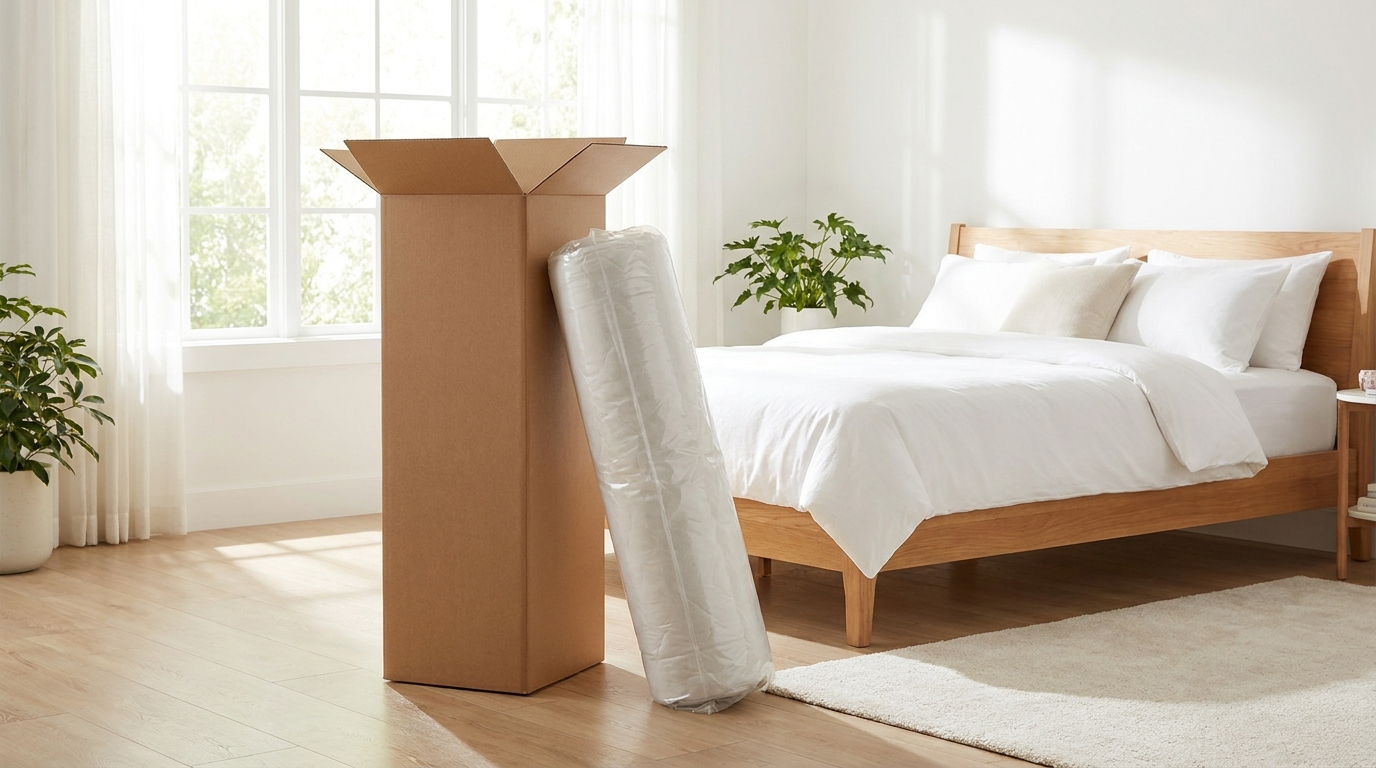
Buying a Mattress Online Without Regretting It
Mattresses moved online by solving delivery — vacuum-pressed into a box — and by promising that a long home trial replaces showroom testing. The model mostly works for buyers, but the industry around it runs on mechanics worth knowing before you click, because this category plays pricing games older than the internet.
The trial is the product
Nobody can evaluate a mattress in a minute of showroom lying; bodies need weeks to adapt. The online industry's 100-night trial is therefore a genuine improvement — read as a real term, not a slogan. Check three specifics: the minimum trial period before a return is allowed (many require 3–4 weeks of adaptation first), whether returns are free collections or your logistical problem, and whether the refund is full or docked fees.
Returned mattresses are rarely restocked — they are donated or disposed of — which is why generous trials coexist with genuinely effortful return processes. The trial is honoured; the friction is the business model's counterweight.
Comparison shopping is deliberately impossible
Mattress makers sell the same or near-identical models under exclusive names per retailer, killing price comparison — a decades-old showroom tactic that survived the move online intact. On top sits the permanent-sale culture: mattresses carry the most inflated reference prices in e-commerce, with "70% off" as the resting state. Ignore every crossed-out number in this category entirely — the fake-reference playbook at its purest — and compare only real prices via a history chart.
Review content is also commercially saturated: mattress affiliate commissions rank among the web's highest, and many "best mattress" rankings order payouts as much as merit. Independent testing organisations and long-term owner threads are the antidote.
Firmness words mean nothing between brands
One brand's medium is another's firm; no standard exists. Body weight and sleeping position move the target more than the label does — heavier sleepers sink further through the same foam; side sleepers need more give at shoulder and hip. The closest things to objective signals in a listing: foam density (memory foam below ~50 kg/m³ is where sagging comes from), coil count and gauge in hybrids, and the depth of the actual comfort layers rather than the total height.
A worked example
A queen hybrid is "€1,299, today €649". The history chart shows it has sold between €599 and €699 every week this year: the real price is ~€650 and the banner is furniture-industry theatre. Spec check: 1,000+ pocket coils, comfort foam at 55 kg/m³, 25 cm total with 5 cm of comfort layer — defensible construction for the price. Terms check: 100 nights with a 30-night minimum, free collection, full refund, 10-year warranty against >2.5 cm sagging. Verdict: buy at €629 on the next minor dip, sleep on it for six weeks, and calendar a decision for night 45. The purchase is fine — the process is what refused three separate traps on the way.
The sensible process
Shortlist on materials and density rather than brand stories; buy inside a sale cycle without believing its percentage; confirm trial terms in writing; and actually use the trial — most buyers adapt and keep, but the option is a large part of what you paid for. A calendar entry at week six ("keep or return?") converts the trial from marketing into consumer protection. Warranties here cover manufacturing defects and measured sagging beyond a stated depth, not gradual comfort loss — the usual warranty-reading rules apply, tape measure included.
FAQ
Are boxed mattresses worse than traditional ones? Compression doesn't harm modern foams and hybrids; quality differences live in materials, not delivery format. The box changed logistics and margins — construction still decides comfort and lifespan.
What does a fair price look like? Queen-size guide: dependable all-foam €350–600, solid hybrids €600–1,000, genuinely premium construction above that. Paying more mostly buys thicker comfort layers and denser foams — verifiable in the spec, not the adjectives.
Do mattress toppers fix a wrong choice? A topper can rescue too-firm by a step; nothing rescues too-soft or a sagging core. If you are inside a trial, return it — that is the product working as designed.

Marcus tests the things people actually buy — headphones, laptops, kitchen gear — and cares more about what a spec sheet omits than what it advertises. He has handled enough refurbished returns to know which grades are worth it. He writes our product guides and buying advice.
More about our writers →More in Product Guides
Small Appliances: Separating Machines from Marketing
Wattage is marketing; mechanisms are engineering. What predicts satisfaction is consumables cost, spare parts and the boring failure points.

How to Buy a Laptop You'll Still Like in Year Five
Laptops are bought on numbers and lived with as objects. The specs decide the purchase; the screen, keyboard and thermals decide the satisfaction.

How to Read a Spec Sheet
A specification sheet is a marketing document that happens to contain facts. Knowing which numbers carry information is most of the skill.