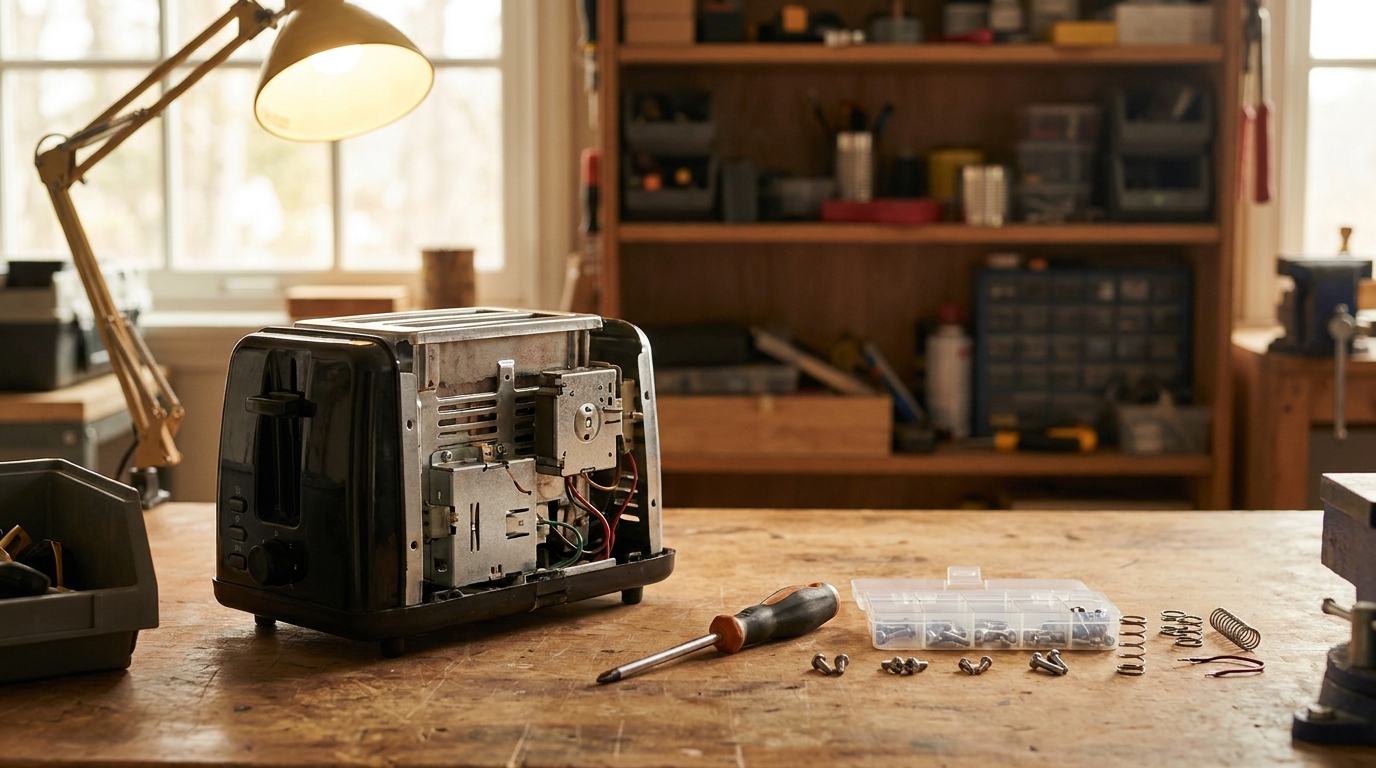
Repair First: The Cheapest Purchase Is No Purchase
The cheapest purchase is the one not made, and a surprising share of "broken" household items sit one cheap part or one video away from working. Repair-first is partly a skill, partly a purchasing strategy, and increasingly a consumer right worth knowing about — the EU's right-to-repair rules now oblige manufacturers to repair common appliances years beyond warranty, and repairability labelling is spreading.
Most failures are boring
Appliances and electronics overwhelmingly fail at the same few points: fuses, switches, seals, belts, hinges, batteries, and blocked filters. These are wear parts, they are cheap, and makers of better goods sell them individually. Before pricing a replacement machine, search the model number plus the symptom — the odds are excellent that thousands had the identical failure and one of them filmed the fix.
The everyday list: washing machines that stop draining (pump filter, ten minutes), vacuums that lose suction (clogs and filters), headphones dead on one side (cable or pads), wobbling chairs (a bolt), kettles that stopped (limescale on the sensor). Most need a screwdriver and the confidence that comes from watching someone else do it first.
Price the repair honestly, then compare
The decision is arithmetic: part cost plus your time (or a repairer's labour) against replacement cost — corrected for the machine's remaining life and the replacement's quality. The trap is comparing repair cost against the machine's original price rather than against what replacing it actually costs today.
| Situation | Verdict |
|---|---|
| €15 pump in a 5-year-old quality washer | Repair, obviously |
| €100 board in a 10-year-old budget machine | Replace |
| €25 battery pack in a 3-year-old cordless vacuum | Repair — the battery was the failure |
| Sealed unit fault in an old fridge | Replace — and buy efficiency, see below |
Repair cafés and independent shops shift the maths further. And before paying for any repair, check whether the fault is covered: statutory guarantees often outlast the manufacturer's warranty, and the claim-naming rules decide whether it is your bill at all.
A worked example
A four-year-old €480 washing machine stops mid-cycle with a drain error. Replacement instinct: €500-plus and a delivery slot. Ten minutes of searching the model and error code: the drain pump is the near-universal culprit, the part costs €22, and a 14-minute video shows the swap needing two tools. Total repair: €22 and an hour. Even hiring it out — €90 call-out plus part — beats replacement by €400. The counter-case matters too: had the fault been the main bearing (€150 part, heavy labour) on the same machine, replacement wins, and the running-cost arithmetic says to spend the saving on an efficient successor during a seasonal low. The method is not "always repair"; it is always price the repair first.
Buy the next thing for repairability
The strategy compounds at purchase time. Machines assembled with screws rather than welded plastic; brands that publish spare-part catalogues and pledge parts availability for years; batteries that are packs, not entombed cells; standard fittings over proprietary ones — these cost little at purchase and decide whether year-six maintenance is €5 or a landfill trip. Repairability indices (France's affichage led; the EU label follows) compress all of this into one number worth a glance in any listing.
The disposal backstop
When replacement genuinely wins, the old unit still has value: working-but-unwanted items sell or donate; retailers in many countries must take back electronics for recycling, often on delivery of the new one. And the item that neither sells nor repairs teaches the best lesson in the whole genre — which failure ended it, and which buying habit would have avoided that failure next time.
FAQ
Is DIY repair safe? Unplugged mechanical repairs — filters, belts, hinges, pads — are low-risk. Mains-side faults, microwaves (capacitors), gas appliances and sealed refrigeration belong with professionals; the arithmetic simply includes their labour.
Does opening a device void my rights? It typically voids the manufacturer's warranty for related faults; statutory faulty-goods rights are harder to lose but muddied by intervening work. Inside any warranty or guarantee window: claim first, repair second.
Where do I find parts for older machines? Manufacturer spares stores, large appliance-parts retailers, and model-number searches on marketplaces. The model plate (inside the door, under the base) is the search key — photograph it once and the whole parts world opens.

Daniel writes about the money side of shopping: what cashback really pays out, which rewards are worth chasing, and how to budget for a purchase instead of financing it badly. He has audited his own subscriptions every January since 2018 and reports the damage honestly.
More about our writers →More in Saving Money

The Electricity Bill Hiding in Your Purchases
For several household devices, lifetime energy cost exceeds the price tag. One line of arithmetic turns efficiency labels into actual money.

Grocery Delivery: Convenience Tax or Quiet Saving?
The delivery fee is the smallest part of the price difference. Item markups, substitutions and changed buying behaviour decide the real cost.

How Cashback Really Works
Cashback is a share of a retailer's marketing commission, not a discount — which explains all of its quirks, including why claims fail.