The Electricity Bill Hiding in Your Purchases
The purchase price of an appliance is paid once; the electricity bill is paid for a decade. For several common household devices, lifetime energy cost exceeds the price tag — which makes running cost one of the most under-used numbers in buying decisions, and one of the easiest to compute.
The arithmetic is one line
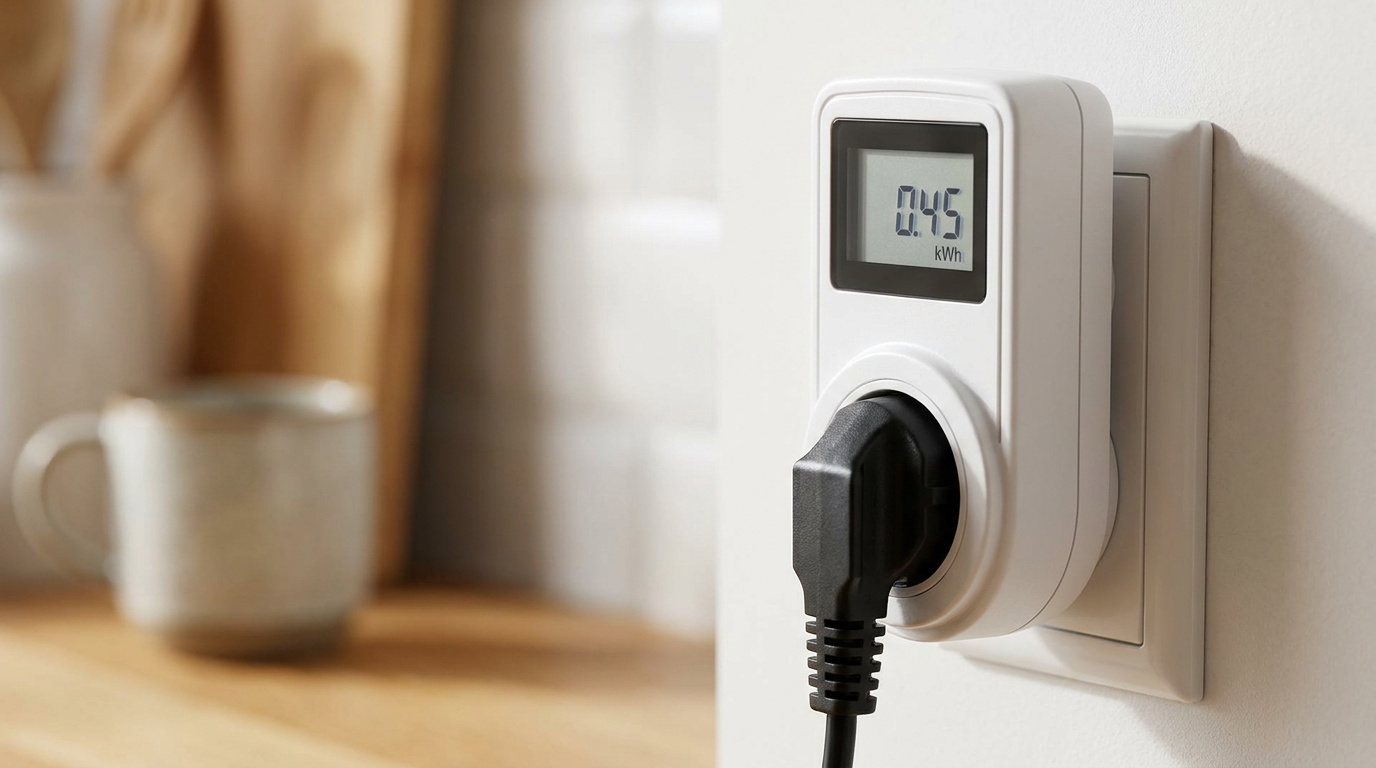
Watts × hours ÷ 1000 × your electricity rate = the cost. A 2,000 W heater running five hours costs 10 kWh; at a European-typical €0.30/kWh, that is €3 a day and roughly €270 across a three-month winter. The same line run for any device converts vague "energy efficient" labelling into money — and a €15 plug-in energy meter makes it empirical: a week of measurement on any suspect device replaces guesswork, and most households find one genuine surprise per audit.
Where the money actually goes
Heat is expensive; electronics mostly are not. Anything whose job is heating or cooling — space heaters, dryers, water heaters, air conditioning, ageing fridges — dominates household consumption. A phone charger or an LED bulb is a rounding error, and "optimising" them is effort spent on the wrong decimal place.
The nuance is duration: always-on beats powerful-but-brief. A modest 60 W of permanently running equipment — an old fridge working hard, a desktop never sleeping, a router stack — is 526 kWh a year, about €158. The kettle, for all its 3,000 W drama, costs a fraction of that.
| Device | Typical annual cost (€0.30/kWh) |
|---|---|
| Heat-pump dryer (4 loads/wk) | €45–60 |
| Condenser dryer (4 loads/wk) | €95–125 |
| 10-year-old fridge-freezer | €110–160 |
| New efficient fridge-freezer | €35–55 |
| Desktop PC left on 24/7 | €120–180 |
| Same PC, sleep-scheduled | €25–45 |
A worked example
A 12-year-old fridge-freezer is measured at 1.9 kWh/day — €208/year. A modern efficient replacement is rated around 0.45 kWh/day — €49/year, saving €159 annually. Against a €550 replacement price, payback is ~3.5 years on electricity alone, with a decade of service ahead; catching the replacement in a seasonal sale at €440 pulls payback under three. Contrast the neighbouring temptation: replacing a working €25/year television "for efficiency" saves perhaps €8 annually — a payback measured in decades. Same logic, opposite verdicts; the meter and the one-line formula are what tell them apart.
Efficiency pays at replacement time
When an appliance is due anyway, the energy label is a price tag in disguise: the gap between an efficient and an inefficient dryer or fridge, over 10–15 years, frequently exceeds the price difference between them. Heat-pump versus condenser dryers are the textbook case — dearer to buy, roughly half the running cost per load. Fold the annual figure into the total-cost comparison exactly as the big-purchase budgeting method prescribes: purchase price plus (annual energy × expected years) puts both machines on one honest line.
Replacing working appliances purely for efficiency rarely pays. The exceptions are the measured monsters — the old chest freezer in the garage variety — which is again what the meter is for.
Standby is real but modest
Standby draw has improved enormously; what remains concentrates in set-top boxes, older audio gear, and anything warm while "off". A switchable strip on the entertainment stack typically recovers €20–40 a year — worth a €10 strip, not worth a crusade. The headline money stays with heat, cold and always-on.
FAQ
Are energy labels trustworthy? The classes are measured under standardised tests and comparable within a category. Your usage shifts absolute numbers — but A-versus-D gaps are large enough to survive any realistic usage pattern.
Do smart plugs save money by themselves? Only what they switch off. Their real value is measurement and scheduling — finding the always-on losses and killing standby clusters automatically.
Is off-peak electricity worth chasing? On time-of-use tariffs, shiftable heavy loads — dishwasher, washing, drying, EV charging — can run 30–50% cheaper overnight. It changes when to run machines, and occasionally which machine to buy (delay-start buttons earn their keep).

Daniel writes about the money side of shopping: what cashback really pays out, which rewards are worth chasing, and how to budget for a purchase instead of financing it badly. He has audited his own subscriptions every January since 2018 and reports the damage honestly.
More about our writers →More in Saving Money
Repair First: The Cheapest Purchase Is No Purchase
Most 'broken' household items sit one cheap part or one video away from working. Repair-first is a skill, a purchasing strategy and increasingly a right.

Grocery Delivery: Convenience Tax or Quiet Saving?
The delivery fee is the smallest part of the price difference. Item markups, substitutions and changed buying behaviour decide the real cost.
How Cashback Really Works
Cashback is a share of a retailer's marketing commission, not a discount — which explains all of its quirks, including why claims fail.