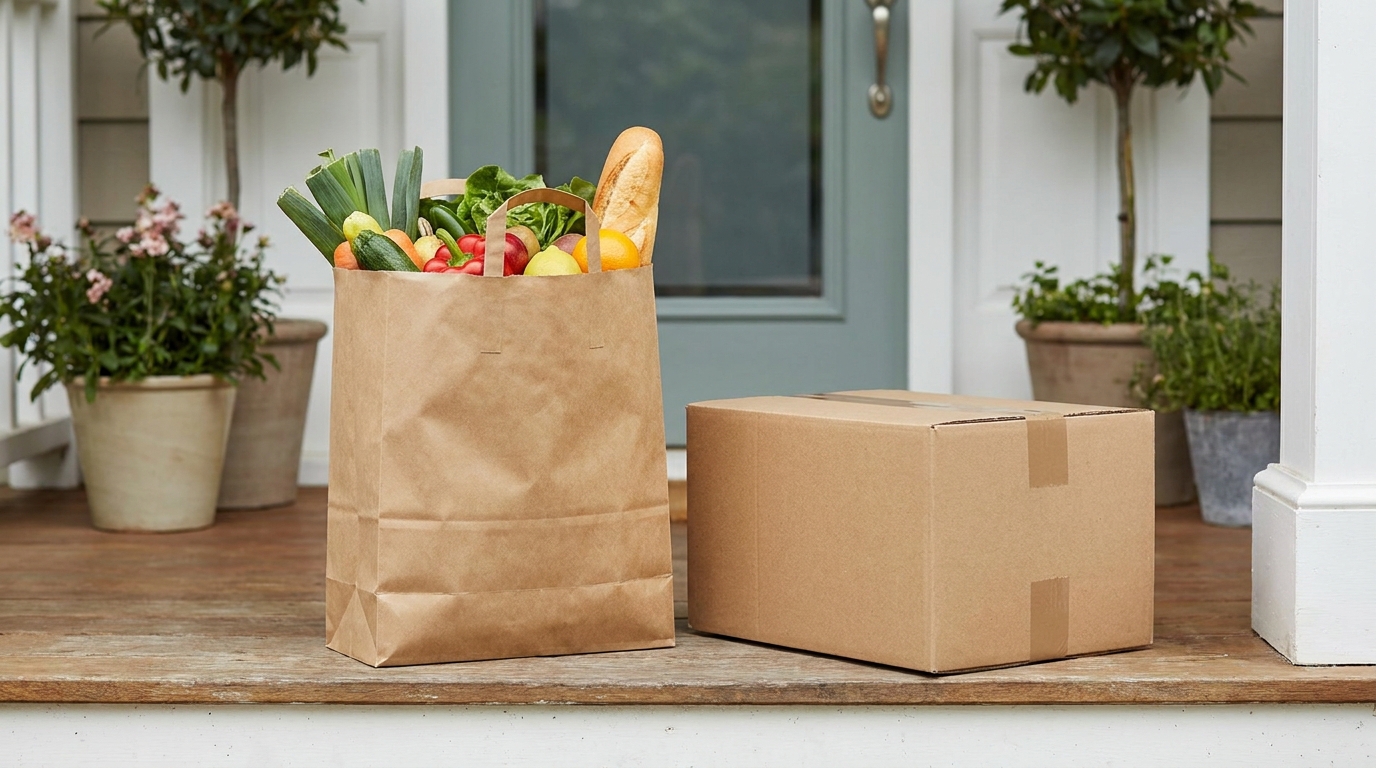
Grocery Delivery: Convenience Tax or Quiet Saving?
Grocery delivery is sold as a convenience with a delivery fee, but the fee is the smallest part of the price difference. The real economics live in item pricing, substitutions and changed buying behaviour — some of which cut against you, and some of which can be turned into genuine savings once you see them.
The price of an item is not the price of the item
Several grocery platforms — particularly third-party shopping services — mark item prices above shelf price, on top of any visible fees and tips; independent basket studies routinely find gaps of 10–15% before a fee appears. Retailers' own delivery services usually match shelf prices but recover costs through fees, minimum orders and memberships.
Before judging any service, run one real comparison: your actual weekly basket, priced in the app against the same items in-store. The result is frequently larger than every visible fee combined — and occasionally, embarrassingly, negative, once the behavioural effects below are counted.
A worked example
A household's typical in-store shop: €92, plus the untracked extras that ride along — call it €8 of aisle impulse — so €100 walks out the door, plus 70 minutes of travel and queueing. The same list through the supermarket's own app: €94 of items (two shelf-price exceptions), €4 delivery in an off-peak slot, zero impulse additions because the checkout total sat visible the whole time: €98, and the 70 minutes come back. Through a third-party courier app instead: the same basket prices at €106 with fees and tip on top — €117. Verdict: the retailer's own service roughly breaks even on money and wins on time; the convenience-courier tier costs €17–19 per shop, which is a price worth knowing you are paying.
Delivery removes the bad kind of spending
The counterweight is behavioural, and it is real. Shopping from a list in an app eliminates endcap and checkout-lane impulse purchases; the running total disciplines the basket in real time; and unit-price sorting — €/kg across every pack size and brand — is something no physical aisle offers. Households that switch often find total spend drops after fees, because the store's entire impulse architecture loses its vote.
The app also makes the cheapest habits frictionless: repeating a known-good basket, defaulting to own-brand ranges the search surfaces beside the branded item, and pantry-loading only when the unit price genuinely dips.
Substitutions and slots are where value leaks
Out-of-stock substitutions default to "something similar", which routinely means a smaller pack at a similar price or a dearer brand at the same count. Turn substitutions off, or review them at the door — refusing a bad substitution is a button, not a confrontation. Delivery slots price-discriminate: off-peak and flexible windows run consistently cheaper, and same-day urgency is the most expensive item on the menu, per the general economics of rapid delivery.
Membership passes flip the arithmetic at frequency, and only at frequency: an unlimited-delivery pass amortised over weekly orders is cheap; over monthly orders it is a fee plus a psychological nudge to order more. Your order history — not your intentions — is the input, exactly as with every other recurring charge.
The honest comparison
Time is the missing line item in most grocery maths. If delivery's true overhead lands near zero after behavioural savings — as it often does through a retailer's own service — the hour returned every week is the actual product, and it is being sold remarkably cheaply. Run your basket comparison once, pick the cheapest pattern that fits the household, and re-check annually: platform pricing models change quickly, and last year's verdict quietly expires.
FAQ
Which is cheaper — the supermarket's own delivery or courier apps? Almost always the supermarket's own service: shelf prices plus a transparent fee, versus marked-up items plus fees plus tip. Courier apps win on speed and coverage, and charge for both.
Do delivery services get worse produce? Quality varies by picker and store more than by channel. Practical fixes: note preferences where the app allows, reject at the door when it misses, and keep the fragile items (avocados, berries) for occasional in-person top-ups.
Are the app-exclusive coupons worth chasing? They are real but small — the structural wins (unit-price sorting, impulse elimination, off-peak slots) dwarf them. Take coupons on items already in the basket; never let one add an item.

Daniel writes about the money side of shopping: what cashback really pays out, which rewards are worth chasing, and how to budget for a purchase instead of financing it badly. He has audited his own subscriptions every January since 2018 and reports the damage honestly.
More about our writers →More in Saving Money
Repair First: The Cheapest Purchase Is No Purchase
Most 'broken' household items sit one cheap part or one video away from working. Repair-first is a skill, a purchasing strategy and increasingly a right.
The Electricity Bill Hiding in Your Purchases
For several household devices, lifetime energy cost exceeds the price tag. One line of arithmetic turns efficiency labels into actual money.
How Cashback Really Works
Cashback is a share of a retailer's marketing commission, not a discount — which explains all of its quirks, including why claims fail.